

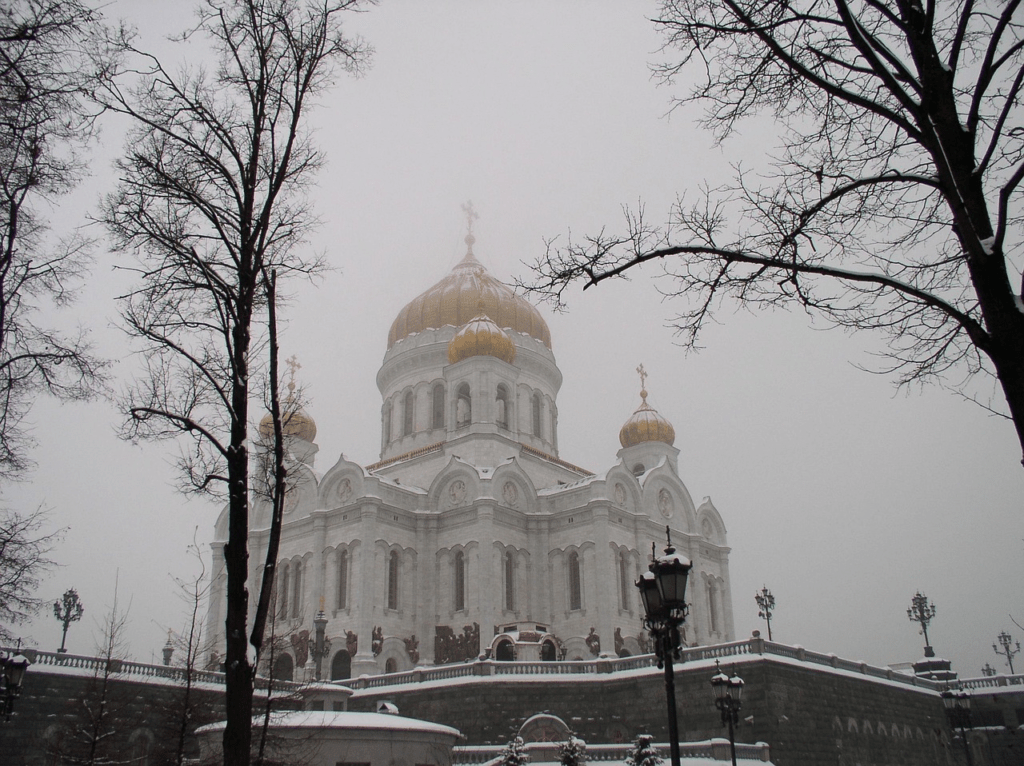
In Yelets, a town of golden Orthodox domes and frozen river embankments sitting 350 kilometres south of Moscow, something has quietly changed. The landscape is still recognizably Russian, still beautiful in the way that old provincial towns can be, with their crumbling grandeur and unhurried pace. But layered over it now, like frost that never quite melts, is the visual language of a nation at permanent war. Recruitment billboards promise life-changing sums. Murals of young men in uniform cover the facades of Soviet-era apartment blocks. At the bus station, a ticket collector named Irina knows the names on the casualty lists not as strangers but as neighbours, cousins, the sons of people she has known for years.
Four years after Russia launched its full-scale invasion of Ukraine on 24 February 2022, the conflict has done something that few anticipated in those early, chaotic weeks: it has become normal. Not acceptable, exactly, and not celebrated by everyone, but woven so thoroughly into the fabric of daily life that for millions of Russians, it is simply the backdrop against which everything else happens. The “special military operation” has outlasted the Soviet Union’s involvement in the Second World War. It has reshaped the national budget, hollowed out rural communities, accelerated the decay of Soviet-era infrastructure, and subordinated the entire domestic economy to the demands of the military machine.
The Price Tags of Patriotism
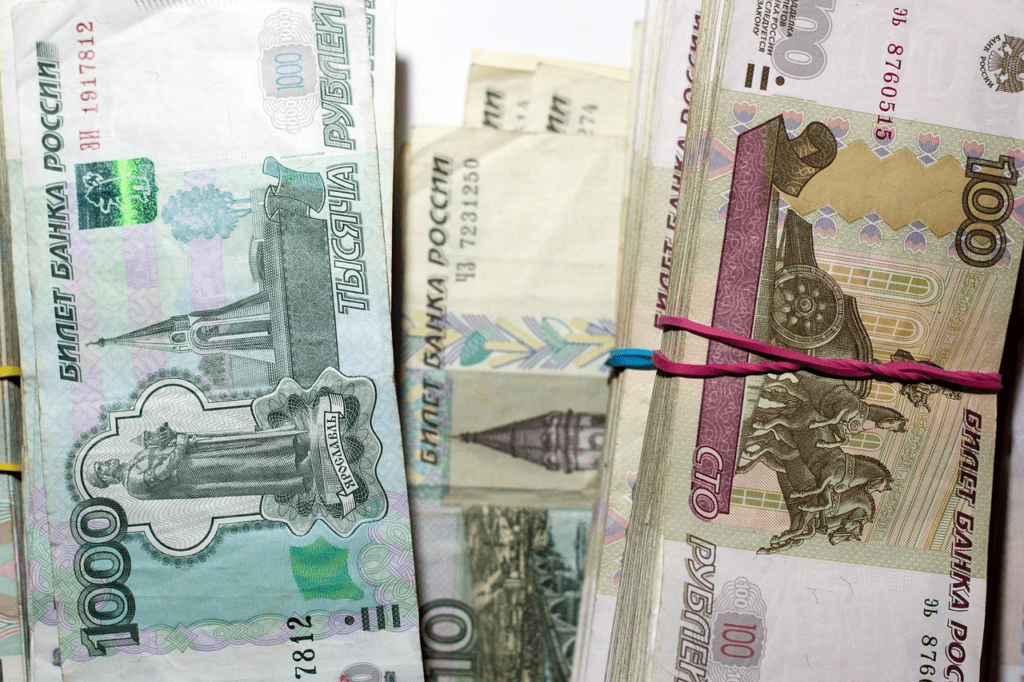
Walk through Yelets and the economics of the war make themselves known in the most direct way imaginable. A sign-on bonus of roughly 2 million rubles (around £15,000) is the going rate for a man willing to sign a military contract. In the more competitive recruitment regions, the numbers are considerably higher. Samara is offering 4 million rubles, combining federal, regional, and corporate contributions into a package that in some communities represents a decade’s worth of ordinary income. Tatarstan and Chuvashia are not far behind. Even Moscow City, under a mayoral decree, is dangling 1.9 million rubles.
This “bonus spiral,” as analysts have taken to calling it, reflects the central contradiction of Russia’s war strategy. The Kremlin wants to sustain a massive offensive force, currently estimated at 600,000 troops, without declaring a second wave of formal mobilisation. The first mobilisation, in September 2022, caused a shock from which public confidence never fully recovered, and hundreds of thousands of Russians fled the country to avoid conscription. So instead of compulsion, the state has turned to enticement, using financial incentives to do quietly what a mobilisation order would do loudly.
The cost is staggering. Maintaining this recruitment machine runs to an estimated 5.1 trillion rubles annually, a sum that consumes enormous chunks of regional budgets already stretched to their limits. And as the pool of willing volunteers begins to dry up, the tactics have grown more creative, and more troubling. At universities in Moscow and St. Petersburg, students facing expulsion have been approached by officials offering a way out: sign a “one-year” contract with the newly created Unmanned Systems Forces, collect a bonus of up to 5.2 million rubles, operate drones from a safe distance behind the front lines, and return to a personalised curriculum once the year is up. It sounds almost reasonable. Lawyers disagree. Under current presidential decrees, military contracts are open-ended until the mobilisation period ends, regardless of the term stated in the agreement. Students are given three days to decide. The pressure is calibrated to prevent them from seeking legal advice.
A Budget Built for War
The financial architecture of the Russian state has been fundamentally reoriented. The 2026 federal budget tells the story plainly: total expenditure of 44.1 trillion rubles against revenue of 40.3 trillion, leaving a deficit of 3.8 trillion. Defence and internal security together account for a share of spending that would have been unthinkable before 2022. Approximately 25% of the total budget is classified, and analysts estimate that around 80% of those hidden funds serve military purposes.
To fill the gap, the Kremlin has reached into the pockets of ordinary Russians in the most direct way available: a VAT increase from 20% to 22%, effective January 2026, explicitly earmarked for “defence and security.” The move is expected to generate an additional 1.2 trillion rubles, but the inflationary knock-on effects are expected to persist long after economists would prefer. For households already struggling with utility bills and grocery costs that residents in Lipetsk describe as “suffocating” and “crushing,” this is not an abstract fiscal adjustment. It is an immediate deterioration in living standards, justified by state television anchors like Dmitry Kiselev as a necessary sacrifice for the war effort.
The National Wealth Fund, Russia’s sovereign cushion built from oil revenues during the years of high prices, has been depleted from a pre-invasion high of roughly $150 billion to approximately $38 billion. For the first time since 2006, Russia’s external debt has climbed above $60 billion. The financial buffers that allowed Moscow to absorb the first waves of sanctions are thinning. What happens when the oil price drops sharply, or when the “shadow fleet” carrying Russian crude faces more effective interdiction, is a question that Russian economic planners would prefer not to answer in public.
The Death of the Small Business
Anastasiya Bykova runs a bakery in Yelets. She has a word for what she watches happening to her town’s economy: “greyification.” When the local bakeries close, when the restaurants shutter and the service providers disappear, what remains is not simply an absence of those businesses but a degradation of the social texture of the place. A dark grey patch, she says, where something living used to be.
The 2026 tax reforms have been particularly brutal for small and medium enterprises. The revenue threshold below which businesses could operate under the simplified tax system has been slashed from 60 million rubles to 20 million, with a further cut to 10 million planned by 2028. Businesses that once qualified for streamlined, affordable tax arrangements have been pushed into more expensive and administratively demanding regimes, at exactly the moment when their costs are spiking due to the VAT increase and supplier adjustments.
Denis Maksimov, who runs a small bakery chain called Mashenka in the Moscow region, reported a 30% jump in operational costs as suppliers passed on the tax changes. His story became briefly famous because he raised the issue directly with Putin on a televised call and received a personal intervention. This prompted the “We Are Mashenka” campaign, in which hundreds of entrepreneurs pointed out that personal favours from the Kremlin are not a substitute for coherent policy. In St. Petersburg, around 10% of beauty shops closed in late 2025 and early 2026, with a further 10% sold off as their owners accepted that the numbers no longer worked.
The SME sector contributes roughly 20% of Russian GDP, but it has none of the political leverage enjoyed by the state-aligned defence conglomerates that have thrived under war conditions. The asymmetry is intentional and its consequences are accumulating.
Villages Without Men
The village of Sedanka sits on the Kamchatka Peninsula, more than 7,000 kilometres from the front lines in eastern Ukraine. Of its 258 residents, 39 men, virtually the entire fighting-age male population, signed military contracts. By early 2026, 12 of them were confirmed dead and 7 were missing. Nearly half of those who left did not come back whole.
What remains in Sedanka is a community that cannot function. In a place where winter temperatures reach minus 10 degrees Celsius, there is no one left to cut firewood, maintain the housing stock, or perform the physical labour that keeps a rural settlement alive through the cold months. Sedanka is not unique. It is a microcosm of what has happened across the Russian Far East, in the Volga-Ural region, and in dozens of small republics where the bonus spiral has done its work most effectively precisely because the alternatives were so limited. A one-off payment of 2 million rubles represents a calculation, not a celebration, and for men in economically stagnant communities, the calculation can make a terrible kind of sense.
The geography of the confirmed death toll reveals the strategy beneath the recruitment pattern. Independent verification by Mediazona and the BBC Russian Service has confirmed 186,102 military fatalities as of February 2026, with estimates of actual deaths likely exceeding 300,000 when unrecorded casualties are included. Bashkortostan, Tatarstan, and Sverdlovsk region each account for thousands of confirmed deaths. Moscow city, with a population orders of magnitude larger, has lost fewer than 2,800. The war has been distributed deliberately, drawing most heavily from the periphery, from ethnic republics and rural regions, to insulate the capital from the immediate social consequences of mass casualties.
The Infrastructure Nobody Is Fixing
Ivan Pavlovich is a pensioner in Lipetsk. He supports the war, or says he does, in the way that many Russians of his generation feel they must. He would have fought himself, he says, if he were younger. But his apartment wall has turned to ice because a pipe has been leaking for months with no repair in sight, and the broken lift in his building means he is effectively confined to his floor. The “excellent” military operation, he notes, has not made his pipes work or his lift function.
The winter of 2025-2026 was the worst on record for infrastructure failures. In January 2026 alone, 1,788 reports of utility disruptions were recorded nationally, compared to 983 in January 2025: a near-doubling in a single year. Power outages more than doubled. Heating failures more than doubled. In the Murmansk region, five ageing electricity pylons collapsed, leaving tens of thousands without power for four days in Arctic conditions. In Atamanovka, in Zabaykalsky Krai, more than 5,000 residents went without heating for over a week in temperatures of minus 25 degrees Celsius.
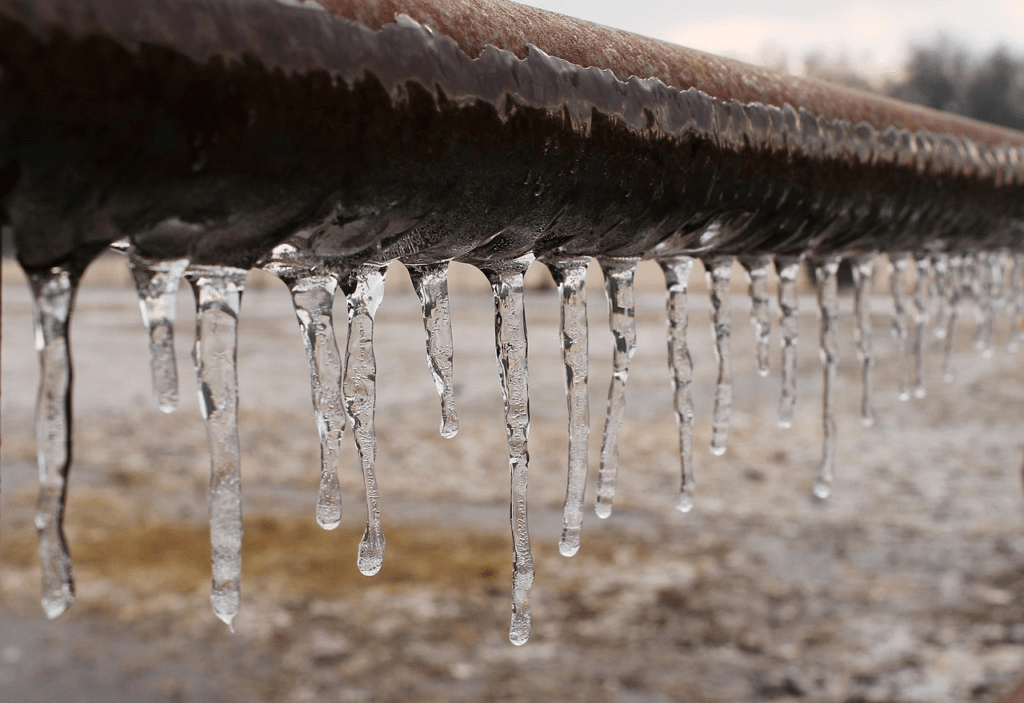
The connection to the war is direct. The budget for communal infrastructure modernisation has been roughly halved over the past four years. The Soviet-era pipes, pylons, and heating systems that serve most of Russia’s regional cities were already operating well beyond their intended lifespans. Deferred maintenance has become no maintenance, because the money went elsewhere.
And then there are the shelters. In Yelets and Lipetsk, at bus stops and in parks, concrete emergency structures have appeared that did not exist before 2022. They are a response to the escalating Ukrainian drone campaign against Russian energy and industrial targets. Residents have grown accustomed to sirens, to retreating into windowless corridors while they wait to find out whether the impact will be close. Irina, the ticket collector, describes a life of hunkering down, of waiting for a better time that keeps failing to arrive.
The Arithmetic of Endurance
Russian state polling gives Putin a trust rating of 79%. Independent polling by the Levada Center suggests that 61% of Russians still favour starting peace negotiations, down from a high of 66% in late 2025, while those supporting continued military operations have risen from 25% to 31% in a single month. A plurality of 59% say that if peace cannot be reached immediately, Russia should escalate rather than make territorial concessions.
These numbers do not describe a population on the edge of revolt. They describe something more complicated: a society that has been successfully persuaded to frame compromise as defeat, and to accept the ongoing costs of the war as preferable to any outcome that could be characterised as a loss. State television has done its work. The “collective West” is a coherent villain. China’s approval ratings sit above 80%. The United States and European Union have plummeted.
What the numbers also show, if you look carefully, is the texture of exhaustion. Trust in Putin is high, but analysts note that it increasingly reflects powerlessness rather than enthusiasm. Support for the war is present, but it is the support of people who have absorbed its costs and concluded they have no alternative framework in which to make sense of them. The murals on the apartment blocks in Yelets, the “Glory to the heroes of Russia!” slogans beneath the faces of the dead, serve their purpose. They transform grief into narrative, loss into meaning. Whether that meaning can continue to hold as the National Wealth Fund dwindles and the pipes freeze is a different question.
The pancake cafe in Yelets, the one that uses “V” and “Z” in its branding and sells itself with the slogan “Grab a pancake, then the whole world,” captures something true about the current moment in Russia. The militarisation of daily life has reached the point where it is marketing, where it is branding, where it is the air through which commerce moves. Putin has said that Russia’s borders do not end anywhere, that any territory a Russian soldier steps on is “ours.” The cafe owner has taken the hint.
Four years in, Russia is not losing the war in any way that its government cannot manage. But it is also paying for it in ways that are only beginning to compound. The villages without men. The pipes that freeze. The students being handed contracts they cannot legally escape. The bakeries going dark. Sedanka, Yelets, Lipetsk, Atamanovka: each is a data point, and together they sketch the outline of a country that has mortgaged its future to sustain a present that is becoming, for many of its people, increasingly hard to live in.

